Anne Mariën: Abstract Atmospheres Charged With Life
By Bianca Kann - May 29, 2026
LINK TO ARTICLE
“Anne Mariën paints “the unpaintable”;
she creates energetic visual experiences of beauty and brightness.”
Where Intuition First Found Its Language
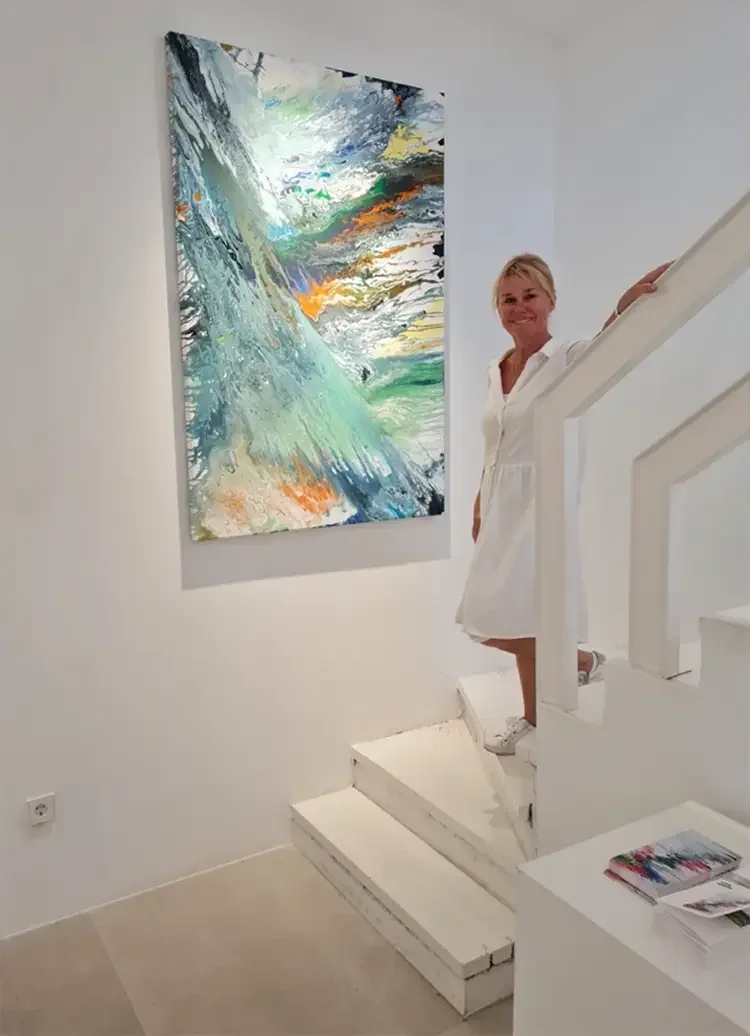
Creative instinct shaped Anne Mariën long before she formally embraced life as an artist. Born in Mechelen, Belgium, she spent years carrying an intense desire to create, guided by a fascination with forms of beauty that resist verbal explanation and instead move through emotion and sensation. That attraction toward the unspoken became the foundation of her artistic direction. Although her full commitment to painting emerged later in adulthood, the impulse had always existed beneath the surface, quietly gathering force. A decisive transformation began in 2000 when she joined private art sessions led by the Belgian artist and activist Frans Croes in his attic studio at Zennegat, an idyllic location whose atmosphere encouraged experimentation and independence. Croes, known for his unconventional thinking and open creative philosophy, became an important early influence. Within that environment, Mariën gradually shaped an artistic language centered on instinct, emotional freedom, and the expressive power of abstraction. Her paintings would eventually become vehicles for experiences that could not be translated literally, only sensed through color, movement, texture, and atmosphere.
The moment Mariën created her first abstract triptych marked a turning point that defined the beginning of her artistic identity. The work rejected stylistic conventions and emerged through intuition rather than predetermined structure. It represented experimentation, rebellion, and liberation at once. Frans Croes responded enthusiastically to the painting’s vibrant chromatic energy and uninhibited spirit, recognizing a creative authenticity that could not be imposed through traditional instruction. Following their weekly sessions, Croes reportedly admitted that there was little more he could formally teach her, encouraging Mariën to continue exploring independently. She later pursued further artistic development at the Mechelen Art Academy, where she expanded her technical knowledge while maintaining the spontaneous freedom that had become central to her practice. The academy offered opportunities to experiment with monumental formats and diverse methods while also connecting her to exhibitions, artistic communities, and international cultural environments. Through those experiences, her creative vocation became increasingly clear, establishing a path grounded in emotional intuition rather than rigid academic systems.
Over time, Anne Mariën developed a body of work distinguished by vitality, movement, and a profound sensitivity to natural energy. Curator Jan Van Woensel described her approach for a 2025 exhibition in Monaco as “positive-abstract with a feminine energy, zest for life and vitality,” emphasizing the spontaneous emergence that characterizes her canvases. That spontaneity remains essential to her process because the paintings are never entirely planned in advance. Instead, each work evolves through interaction between emotion, material, gesture, and subconscious response. Nature, the emergence of life, and energetic transformation repeatedly appear throughout her oeuvre, not through direct representation but through atmospheric suggestion and sensory resonance. Painting functions for Mariën as an introspective act through which new sensations, emotional states, and visual experiences come into existence. Her ambition to paint “the unpaintable” reflects this philosophy directly. Rather than illustrating visible reality, she seeks to evoke experiences that exist beyond language and beyond fixed form, allowing viewers to encounter feeling itself through abstraction.
Anne Mariën: Landscapes Reimagined Through Sensation and Memory
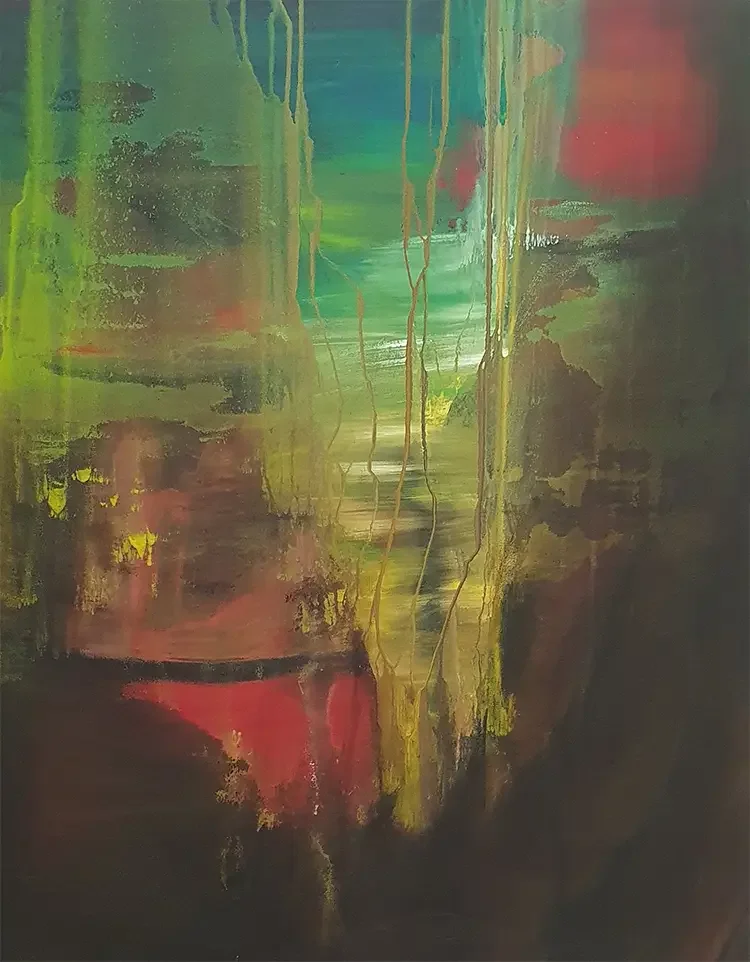
Nature serves as the emotional vocabulary of Anne Mariën’s work, though never in a descriptive or illustrative way. Her paintings do not attempt to recreate mountains, oceans, forests, or skies as recognizable scenes. Instead, they communicate the sensation of encountering them physically and emotionally. Experiences gathered during extensive travels become internalized impressions that later resurface inside the studio through abstract forms, textures, and chromatic atmospheres. Mariën has traveled through countries celebrated for dramatic landscapes and immersive natural environments, including Norway, Ireland, Greece, Spain, Portugal, Croatia, Slovenia, Vietnam, Thailand, Panama, Argentina, Ecuador, Jordan, and Cape Verde. These journeys expose her to shifting climates, vast terrains, luminous coastlines, geological formations, and changing weather systems that leave emotional traces rather than visual snapshots. Once back in Belgium, her studio becomes a contemplative environment where those accumulated impressions are transformed into paintings. The resulting works communicate physical exposure to nature’s elements while resisting direct narrative or figurative translation. Through abstraction, she recreates emotional memory rather than visible geography.
This relationship with nature creates remarkable ambiguity throughout her compositions. Many paintings suggest aerial coastlines, underwater formations, microscopic organisms, weather patterns, volcanic surfaces, or cosmic expanses without fully resolving into identifiable imagery. That uncertainty encourages viewers to move continuously between macrocosmic and microscopic associations, between external environments and internal emotional states. Her paintings often feel suspended between earthly and cosmic dimensions, where paint behaves almost like water currents, vapor, sediment, erosion, or organic growth. Such fluidity gives her work a sense of constant transformation, as though each canvas captures a living process rather than a fixed image. Art collector and former Council of Culture member Frank Nobels described each artwork by Mariën as “a spirited attempt to grasp the totality of life,” a phrase that reflects the expansive emotional ambition behind her practice. The paintings carry an immersive quality because they are built from layered impressions accumulated through movement, observation, and emotional absorption rather than through direct visual imitation.
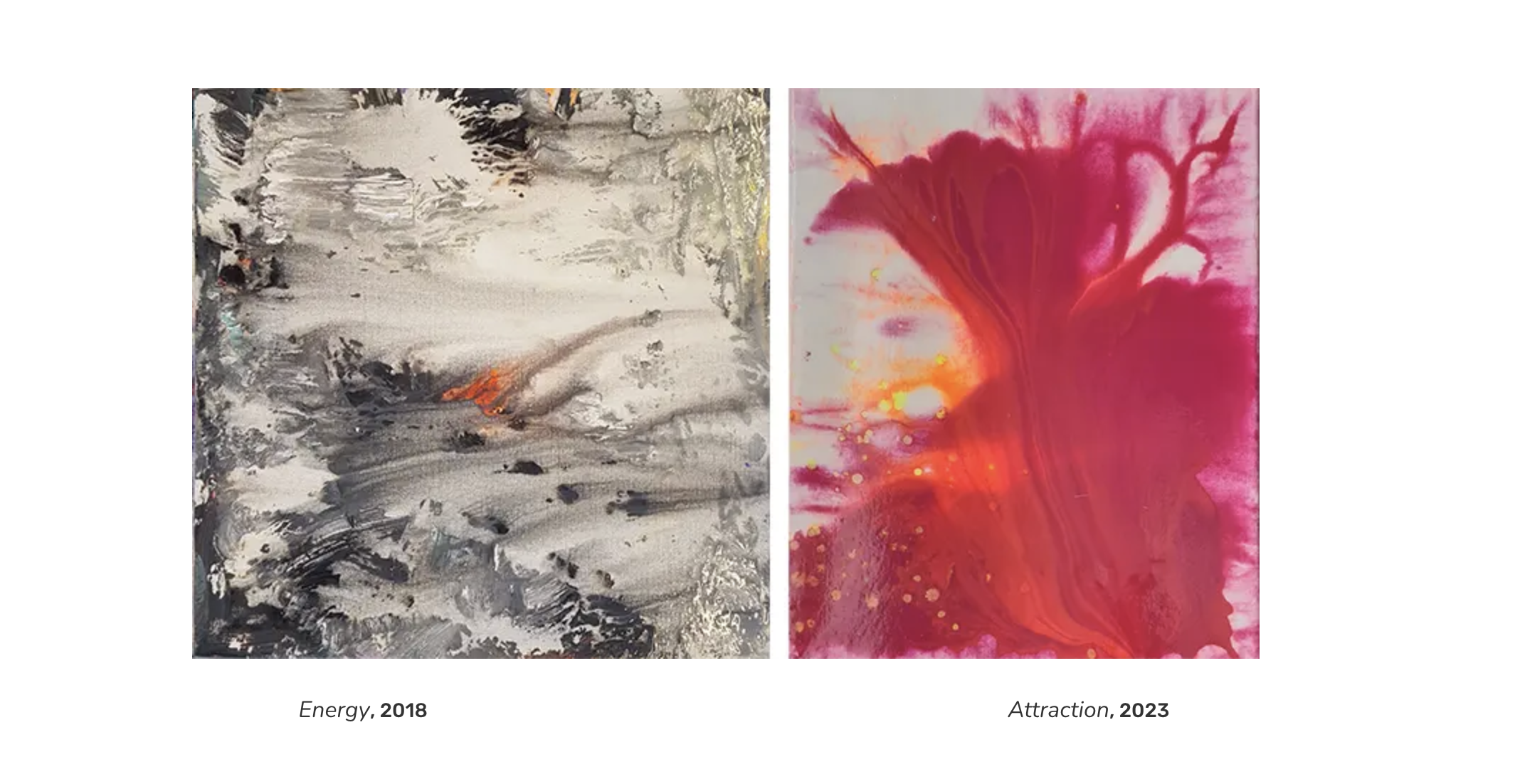
Several admired artists have also contributed to Mariën’s broader visual sensibility, including Gerhard Richter, Herbert Brandl, David Hockney, Mark Rothko, and Katharina Grosse. Yet despite echoes of postwar abstraction and gestural painting traditions, her artistic voice remains highly individual. Certain works may recall aspects of Art Informel, Abstract Expressionism, or Tachisme, particularly in their fluid structures and energetic surfaces, but Mariën’s paintings possess a luminous warmth and regenerative energy that distinguish them from darker existential strains of abstraction. Her approach combines spontaneity with compositional balance in a way that feels instinctive rather than calculated. Radiant blues, mineral greens, volcanic blacks, vivid oranges, acidic yellows, and flashes of magenta interact dynamically across the canvas, creating emotional acceleration through color alone. Cooler compositions often generate translucent atmospheric depth, while warmer works radiate intensity and sensuality. Throughout all of them, there is movement toward illumination, renewal, and emotional openness rather than fragmentation or despair.
Material, Motion, and the Emotional Climate of Paint
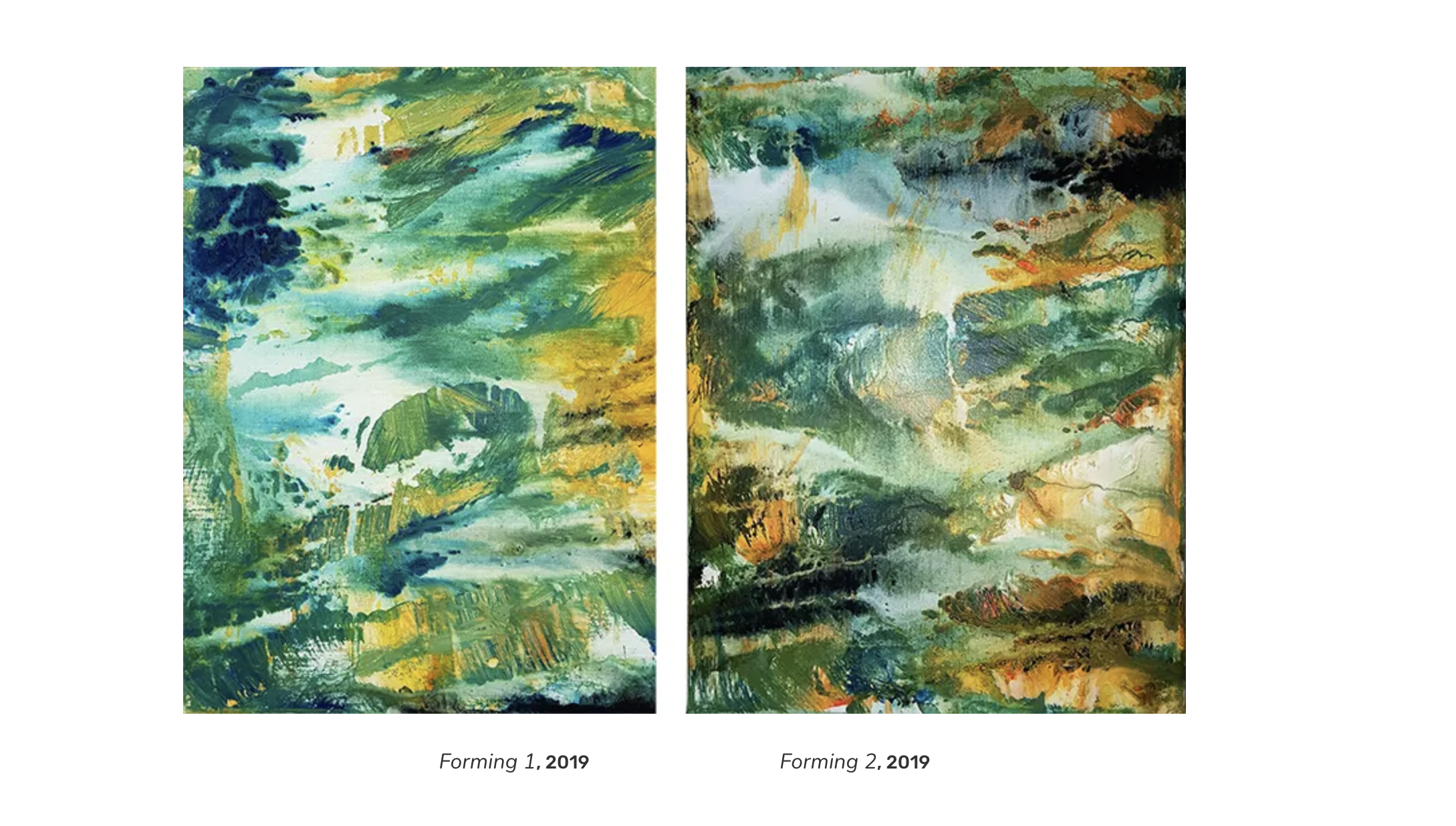
One of the most compelling aspects of Anne Mariën’s practice lies in her ability to create paintings that feel simultaneously spontaneous and carefully orchestrated. Her surfaces pulse with motion through poured pigments, layered stains, dragged textures, gestural brushwork, and translucent veils of color that appear to evolve organically across the canvas. Yet beneath that apparent improvisation exists a strong compositional intelligence that holds the visual energy together. Rather than choosing between explosive freedom and meditative restraint, Mariën allows both tendencies to coexist. The result is a visual language that appears alive and continuously shifting. Paint becomes more than a medium in her work; it behaves like a living substance capable of embodying natural forces and emotional states. Drips resemble traces of time, textures evoke erosion or growth, and layered pigments create atmospheres that suggest memory, transformation, and movement. Each canvas appears suspended within an active process of becoming rather than existing as a finalized static object.
This dynamic relationship between control and surrender defines much of her technical process. Acrylic fluidity, scraping, staining, pouring methods, and expressive mark-making all contribute to surfaces that contain both unpredictability and structure. Importantly, these techniques never function as decorative gestures disconnected from meaning. Every material decision reinforces the emotional atmosphere of the painting itself. Certain compositions generate the sensation of immersion, as though the viewer has entered a shifting environmental condition rather than simply observing an artwork. Others communicate geological density or cosmic vastness through accumulations of texture and chromatic depth. Light frequently appears embedded within the paint, emerging from beneath translucent layers instead of resting superficially on the surface. This internal luminosity contributes strongly to the emotional accessibility of her work because viewers respond physically and intuitively to the atmosphere before attempting intellectual interpretation. The paintings invite emotional participation through sensation, rhythm, and spatial immersion rather than through narrative explanation.
Mariën’s abstractions remain remarkably approachable despite their complexity because they prioritize resonance over conceptual distance. Many contemporary abstract works emphasize theoretical interpretation or intellectual decoding, yet her paintings function differently. They operate as emotional climates where intuition, memory, imagination, and sensation coexist fluidly. Viewers are encouraged not to solve the image but to inhabit it emotionally. This openness contributes significantly to the regenerative quality often associated with her art. Even darker compositions contain movement, vitality, and subtle emergence rather than emotional collapse. Her paintings suggest transformation in progress, where chaos gradually reorganizes into light, balance, and atmospheric harmony. Such qualities explain why her work continues to resonate across varied audiences and international exhibition contexts. The emotional immediacy of her visual language allows audiences from different backgrounds to connect with the work through personal feeling rather than specialized art historical knowledge. In this sense, Mariën’s paintings become experiences rather than representations, emphasizing emotional presence above fixed interpretation.
Anne Mariën: Building an International Presence Through Creative Evolution
Recent years have marked an important period of expansion within Anne Mariën’s career, particularly through her collaboration with curator Jan Van Woensel beginning in 2024. Their partnership has generated several significant projects that have increased international visibility for her work while deepening critical engagement with her artistic philosophy. Among these developments was the publication of the essay “The unpaintable” in Whitehot Magazine of Contemporary Art in New York, a text that explored the experiential and emotional dimensions of her abstraction. The collaboration also led to curated solo and group exhibitions alongside participation in international art fairs across Belgium, France, Monaco, the United States, and the Czech Republic. Cities including Antwerp, Mechelen, Knokke, Paris, New York, and Pilsen became important stages for presenting her evolving body of work to broader audiences. These exhibitions strengthened recognition of Mariën as an artist whose paintings communicate across cultural boundaries through atmosphere, intuition, and emotional immediacy rather than through narrative specificity.
Alongside these international activities, Mariën maintains a strong connection to her local environment in Mechelen, where her permanent exhibition at Hotel Elisabeth functions as both a presentation space and a place of encounter. There she regularly meets collectors, guests, and visitors while continuing to balance travel with intensive studio practice. This rhythm between movement and reflection remains deeply integrated into her creative process. Journeys outward into unfamiliar landscapes are consistently followed by inward periods of contemplation and artistic transformation. Her studio therefore becomes not only a workspace but also a meditative environment where accumulated experiences are filtered into abstraction. That ongoing exchange between external discovery and internal reflection gives her paintings their emotional density and layered atmospheric quality. Even as her visibility grows internationally, the essential core of her work remains rooted in intuition, sensory memory, and a deeply personal relationship with natural energy and transformation.
The next major milestone in Mariën’s artistic trajectory is the release of her first retrospective monograph, scheduled for winter 2026. The publication is expected to provide a comprehensive overview of her development, thematic concerns, and evolving visual language across years of sustained experimentation. Such a project arrives at a moment when her work occupies an increasingly distinctive position within contemporary abstraction. Her paintings resist rigid categorization because they combine emotional openness, gestural vitality, atmospheric sensitivity, and technical experimentation without becoming confined to any single movement or theoretical framework. What continues to distinguish Anne Mariën is her commitment to creating paintings that communicate sensation itself. Through luminous color, layered movement, and immersive spatial atmospheres, she transforms abstraction into a direct emotional encounter. Her art does not simply represent nature, memory, or feeling. Instead, it attempts to transmit their energy through paint, allowing viewers to experience something immediate, expansive, and deeply human.

The unpaintable
- review by Jan Van Woensel
I met the artist Anne Mariën in a rural suburb of the city Mechelen, Belgium, where she lives and works. I was first introduced to her via the Royal Lucasgilde, the artist guild established in 1886 that she is a member of, when I was in the process of doing research in preparation of a group exhibition for the Cultural Center of Mechelen in 2017. In her studio, some of the artworks reminded me of the watercolors of Mary Abbott (1921 – 2019), one of the pioneering women in the field of abstract painting, who similarly employed vibrant colors and energetic brushstrokes to create emotional abstractions of nature. Other artworks struck me with their authenticity and intensity: explosions of paint, as if you were looking at something that was innately restless and stemming from the depths of a visionary soul. Anne Mariën paints the unpaintable.
Up until the age of forty, Mariën didn’t receive a formal art training and would only occasionally make drawings and sketches on her travels and vacations. In 2000, when a newspaper published an advertisement from the local artist and activist Frans Croes (1936 – 2011) that announced that he was looking for students, she signed up. For two years on each Sunday morning she traveled to the house of Croes located in the idyllic hamlet of the Zennegat, a confluence of three rivers, to paint, draw and philosophize about life in his attic studio. It isn’t certain how much of an early influence the artist had on Mariën (his work is described as inspired by mysticism, esotery, symbolism and eroticism), but when she showed him an abstract expressionist painting, her first ever, Croes enthusiastically called it “an orgasm”. From that moment, Mariën understood that the artistic motivation that she had felt deep inside of her for such a long time, and the language of expression that she was searching for, now had come together sensibly. Like it was for Mary Abbott, for Anne Mariën too, abstraction “just hit me”. And it can be said that it was the weekly sessions in the studio of Croes that guided her towards her own light. In her words, Mariën recalls that “Frans Croes joined me on my path to the discovery of my artistic language. He taught me to be brave and to source my own inspiration”. With this artistic liberation achieved, he further advised the artist to always stay faithful to her own individuality, to not comply with the dogmas of the academic world (where she would continue her training), and admitted that he can’t teach her anything anymore. So to speak, the true artist Anne Mariën was born out of that painted “orgasm”. The climaxes in the art of Mariën are not sexual. Instead, they relate to a primeval force, to the origin of life, and nature.
The paintings of Anne Mariën are never based on one single image (of nature) but rather on a collection of experiences and impressions that she receives on her journeys, that grab her attention, that she internalizes, almost spiritually, and that she naturally recalls in the process of painting. In fact, in this hides an aspect of her oeuvre that so far has been underexposed. Mariën can be called an artist-traveler. Her wanderings don’t only inspire her work but it depends on them. Nature’s diversity and constant flux, its formidable force, light, colors, exoticness, vastness and immersiveness can be only experienced fully by exploring the outdoors. Her travels to places that are known for their breathtaking sceneries include countries such as: Norway, Ireland, Greece, Spain, Portugal, France, Croatia, Slovenia, Czech Republic, Vietnam, Thailand, Panama, Argentina, Ecuador, Jordan, Cape Verde, Uganda, and the United States, among others. Back at home, the artist’s studio then functions as a meditation space where an introspective journey takes place that is inspired by the physical experiences she gained on the road, as much as it is also the arena for new creation. For the artist, her paintings recall the physical exposure to the elements of nature; a subject that can’t be illustrated figuratively but can only be experimented with in personalized abstract expressions. In a letter to the artist, the former Council of Culture of Mechelen, art collector and friend, Frank Nobels, wrote that “the oeuvre (of Anne Mariën) cannot be defined by one word. She is an authentic artist who is self-critical. She explores, pushes her boundaries and embarks on creative adventures. Each artwork can be described as a spirited attempt to grasp the totality of life”. Experimentation is thus important for the type of work that Mariën is committed to. Experimentation essentially undermines the idea of the ability to control the painting, and as such, she remarks that her artmaking process relies on a combination of technical preparation, action and reaction, and coincidence. Truly remarkable is the observation that in the result of Mariën’s metaphorical journey of creation (the painting) one can visibly recognize gestures and movements that in combination with colors and light, give the impression of a genesis. In this lies the unique quality of the artworks of Anne Mariën. Just like the evocative feeling that we receive when we are looking at a scenic landscape, we can’t say anything about it, because all words would fall short of the immersive experience. Anne Mariën’s unpaintable work is just that.
- Jan Van Woensel
Jan Van Woensel is a curator, art critic and researcher based in Mechelen (BE) and Prague (CZ). He is the founder of зараз: platform for emerging artists and curators from Ukraine, and as of December 2023, he works as the studio manager of Anne Mariën. As a writer, he contributes to Flash Art Magazine and Fotograf Magazine.
Het onschilderbare
Ik ontmoette de kunstenaar Anne Mariën in een buitenwijk van Mechelen, België, waar ze woont en werkt. Ik leerde haar voor het eerst kennen via de Koninklijke Lucasgilde, de kunstenaarsgilde die in 1886 werd opgericht en waar ze lid van is, toen ik onderzoek deed ter voorbereiding van een groepstentoonstelling voor het Cultureel Centrum van Mechelen in 2017. In haar atelier deden sommige kunstwerken me spontaan denken aan de aquarellen van Mary Abbott (1921 - 2019), een van de baanbrekende vrouwen op het gebied van abstracte schilderkunst, die op dezelfde manier levendige kleuren en energieke penseelstreken gebruikte om emotionele abstracties van de natuur te creëren. Andere kunstwerken troffen me omwille van hun authenticiteit en intensiteit: explosies van verf, alsof je naar iets keek dat van nature rusteloos was en voortkwam uit de diepten van een visionaire ziel. Anne Mariën schildert het “onschilderbare”.
Tot haar veertigste volgde Mariën geen formele kunstopleiding en maakte ze enkel af en toe tekeningen en schetsen tijdens haar reizen en vakanties. Toen in 2000 in een krant een advertentie verscheen van de lokale kunstenaar en activist Frans Croes (1936 - 2011) waarin hij aankondigde op zoek te zijn naar studenten, schreef ze zich in. Twee jaar lang reisde ze elke zondagochtend naar het huis van Croes in het idyllische gehucht het Zennegat, een samenvloeiing van drie rivieren, om in zijn zolderatelier te schilderen en tekenen, en te filosoferen over het leven. Het is niet zeker hoeveel invloed de kunstenaar had (zijn werk wordt beschreven als geïnspireerd door mystiek, esoterie, symboliek en erotiek), maar toen ze hem een abstract expressionistisch schilderij liet zien, haar eerste ooit, benoemde Croes het enthousiast als "een orgasme". Vanaf dat moment begreep Mariën dat de artistieke motivatie die ze al zo lang diep van binnen voelde, en de uitdrukkingstaal die ze zocht, nu op een zinvolle manier samenkwamen. Zoals het voor Mary Abbott was, raakte ook voor Anne Mariën de abstractie haar “opeens”. En men kan zeggen dat het de wekelijkse sessies in het atelier van Croes waren die haar naar haar eigen licht leidden. In haar eigen woorden herinnert Mariën zich dat "Frans Croes me vergezelde op mijn pad naar de ontdekking van mijn artistieke taal. Hij leerde me moedig te zijn en mijn eigen inspiratie te vinden". Na deze artistieke bevrijding raadde hij de kunstenaar aan altijd trouw te blijven aan haar eigenheid, zich niet te schikken naar de dogma's van de academische wereld (waar ze haar opleiding zou voortzetten) en gaf hij toe dat hij haar niets meer kon leren. De ware kunstenaar Anne Mariën werd zogezegd geboren uit dat geschilderde "orgasme". De climaxen in de kunst van Mariën zijn wellicht niet seksueel. In plaats daarvan hebben ze betrekking op een oerkracht, op de oorsprong van het leven en de natuur.
De schilderijen van Anne Mariën zijn nooit gebaseerd op één enkel beeld (van de natuur), maar eerder op een verzameling ervaringen en indrukken die ze opdoet op haar reizen, die haar aandacht trekken, die ze internaliseert, bijna spiritueel, en die ze terug oproept tijdens het schilderen. In feite schuilt hierin een aspect van haar oeuvre dat tot nu toe onderbelicht is gebleven. Mariën kan een kunstenaar-reiziger worden genoemd. Haar omzwervingen inspireren haar werk niet alleen, het is er ook afhankelijk van. De diversiteit en constante verandering van de natuur, haar formidabele kracht, licht, kleuren, exotisme, uitgestrektheid en onderdompeling kan alleen volledig worden ervaren door het verkennen van het buitenleven. Haar reizen naar plaatsen die bekend staan om hun adembenemende landschappen omvatten landen zoals: Noorwegen, Ierland, Griekenland, Spanje, Portugal, Frankrijk, Kroatië, Slovenië, Tsjechië, Vietnam, Thailand, Panama, Argentinië, Ecuador, Jordanië, Kaapverdië, Oeganda en de Verenigde Staten. Thuisgekomen fungeert het atelier van de kunstenaar als een meditatieruimte waar een introspectieve reis plaatsvindt die is geïnspireerd door de fysieke ervaringen die ze onderweg heeft opgedaan, maar die ook de arena is voor nieuwe creaties. Voor de kunstenaar herinneren haar schilderijen aan de fysieke blootstelling aan de elementen van de natuur; een onderwerp dat niet figuratief kan worden geïllustreerd maar waarmee enkel kan worden geëxperimenteerd in gepersonaliseerde abstracte uitingen. In een brief aan de kunstenaar schreef de voormalige Cultuurfunctionaris van Mechelen, kunstverzamelaar en vriend, Frank Nobels, dat "het oeuvre (van Anne Mariën) niet met één woord te omschrijven is. Ze is een authentieke kunstenaar die zelfkritisch is. Ze verkent, verlegt haar grenzen en gaat creatieve avonturen aan. Elk kunstwerk kan omschreven worden als een bezielde poging om de totaliteit van het leven te vatten". Experiment is belangrijk voor het artistiek werk van Mariën. Experimenteren ondermijnt in wezen het idee van de mogelijkheid om het schilderij te controleren, en als zodanig merkt ze op dat haar maakproces berust op een combinatie van technische voorbereiding, actie en reactie, en toeval. Werkelijk opmerkelijk is de observatie dat in het resultaat van Mariën’s metaforische scheppingsreis (het schilderij), gebaren en bewegingen te herkennen zijn die in combinatie met kleuren en licht de indruk wekken van een ontstaansgeschiedenis. Daarin schuilt de unieke kwaliteit van de kunstwerken van Anne Mariën. Net als het gevoel dat we krijgen als we naar een uitgestrekt landschap kijken, kunnen we er niets over zeggen, omdat alle woorden te kort zouden schieten t.o.v. de werkelijke en meeslepende ervaring. Het “onschilderbare” thema in het oeuvre van Anne Mariën is precies dat.
- Jan Van Woensel
Jan Van Woensel is curator, kunstcriticus en onderzoeker in Mechelen (BE) en Praag (CZ). Hij is de oprichter van зараз: platform for emerging artists and curators from Ukraine, en sinds december 2023 werkt hij als studio manager voor Anne Mariën. Als schrijver levert hij bijdragen aan Flash Art Magazine en Fotograf Magazine.

Is there a silent image?
- review by Adi Karelitz
Through Anne Mariën’s works, you can begin wandering, the spaces presented are not specific, do not indicate a defined space and therefore also allow wandering in our minds. The term “Reverie”refers to staying in an open state to absorb the emotional experience, through which one can begin to ask questions about the space.
As we can see at the work, we are in an abstract white space, which revealed dark areas deceptive as cracks. It is not clear whether the viewer is on a snowed surface and the ground opens below the legs or if we are at the bottom of a cave and see from above the exit that will save us. Are these cracks on earth or cracks in our souls?
Within the white, smearing, and blurring there is silence, the visual representation of the stillness evoked in me many thoughts related to the experience of the representation and how it is perceived by the creator and in the same breath by the viewer. If every image “tells a story”, is there a silent image?
According to Maurice Blanchot (1907-2003), we think that the image comes after the object, it is a continuation of it and we imagine it, but he claims that we must distance ourselves from the image to perceive it. “What turned into an image, in the blink of an eye, here it became intangible, non-actual, indifferent, not the same thing only removed but the thing itself as distance, the presencewithin the absence, tangible precisely because it is intangible.”...The image is the form of the presence of the absence, the way of the appearance of what does not appear in the world of phenomena, a shadow whose domain is nowhere, remaining a remote and inaccessible world. Will we freeze in Anne’s white, or will we escape it?
- Adi Karelitz
Adi Karelitz is a lecturer at the Department of Visual Communication Design at HIT, Holon Institute of Technology, and she is invested in academic theory and freelance design work. She holds an M.A. with honors from the Interdisciplinary Arts Program of the Faculty of Art, Tel-Aviv University, and researches digital and analog faults in the field of visual art, with an emphasis on Glitch Art.
Anne Mariën: Bestaat er een stil beeld?
Doorheen de werken van Anne Mariën kan je beginnen te dwalen; de ruimtes in haar schilderijen zijn niet specifiek, ze geven geen afgebakende ruimte aan en laten ons daarom ook dwalen in onze geest. De term "Reverie" verwijst naar het houden van een open geestestoestand om emotionele ervaringen te absorberen, waardoor men vragen kan gaan stellen over de afbakeningen van de ruimte.
Zoals we kunnen zien in het werk Untitled (2017) bevinden we ons in een abstracte, grotendeels witte ruimte, waarin enkele donkere gebieden worden onthuld die zich zouden kunnen voordoen als scheuren. Het is niet duidelijk of de kijker zich op een besneeuwde oppervlakte bevindt met de grond die opent onder zijn voeten, of dat hij zich op de bodem van een grot bevindt en boven zich de uitgang ziet die hem zal bevrijden. Zijn dit scheuren in de aarde of zijn het scheuren in onze ziel?
Te midden van het wit, het uitsmeren en vervagen, is er de stilte. De visuele weergave van zo'n stilte roept gedachten op die te maken hebben met de ervaring van de representatie, maar ook met hoe de stilte wordt waargenomen door de maker en door de kijker. Als elk beeld "een verhaal vertelt", kan er dan een stil beeld bestaan?
Volgens Maurice Blanchot (1907 - 2003) zijn we geneigd te denken dat het beeld na het object komt, dat het een voortzetting ervan is, en dat we het ons vervolgens in-beelden. Hij beweert dat we afstand moeten nemen van het beeld om het te kunnen waarnemen. "Elk iets dat wordt uitgedrukt in een beeld, wordt, in een oogwenk, ongrijpbaar, niet-actueel, on-gelijk, niet identiek maar verwijderd, het ding zelf wordt (uitgebeeld als) afstand, de aanwezigheid binnen die afwezigheid, het oorspronkelijke onderwerp wordt tastbaar precies omdat het ongrijpbaar is." (...) Het beeld verschijnt als een vorm van de aanwezigheid van de afwezigheid, als een manier van het verschijnen van wat niet meer verschijnt in de wereld van verschijnselen, als een schaduw wiens domein nergens is, en in de afgelegen en ontoegankelijke wereld van het idee blijft. Bevriezen we in de witte ruimte van Anne Mariën’s Untitled (2017), of ontsnappen we eraan?
- Adi Karelitz
Adi Karelitz is docent aan de afdeling Visual Communication Design aan het HIT, Holon Institute of Technology, en werkt aan theorie projecten en als freelance ontwerper. Ze heeft een cum laude M.A. van het Interdisciplinary Arts Program van de Faculty of Art, Tel-Aviv University, en onderzoekt digitale en analoge fouten op het gebied van visuele kunst, met de nadruk op Glitch Art.
"De laatste jaren ontwikkelt ze een eigen abstracte stijl waarin kleur prominent aanwezig is. Anne geeft haar kleuren de vrijheid en laat ze een eigen weg zoeken op het doek. Ze brengt haar verf aan in verschillende lagen waardoor er een rijke schakering in haar kleurwerking ontstaat."
"These last couple of years she developed and abstract style with an abundance of colours. Anne gives freedom to colour and let them find their way on the canvas. She applies paint in different layers which results in a rich shades of colours."
- Kris Vermeulen
"Anne Mariën's work takes inspiration from the forces found in nature: the diversity, the colours, the light, the constant flux and the power.
Nature appeals to all of us - within it we can meditate, find peace of mind and attain a unique sense of freedom. It is in the encounter with nature that we are forced to recognize the existence of something greater than ourselves, that we, as living creatures, are part of this wonderful world.
Through Marien's art we can immerse ourselves in the captured moment and share her fascination with a stormy sea, a giant rock formation, wide-open spaces and nature's ever changing moods."
- Jacques Brennan, Limerick, Ireland
“In onze woonkamer hangt een kunstwerk van Anne. Het is een prachtig schilderij dat de ruimte kleur geeft en perfect past in het interieur. Nadrukkelijk aanwezig, waardoor het de aandacht krijgt die het verdient. Het is een uniek doek waar je met bewondering naar kijkt. Het roept vragen op, laat verschillende lezingen toe, daagt uit. Het is een doek dat beklijft.
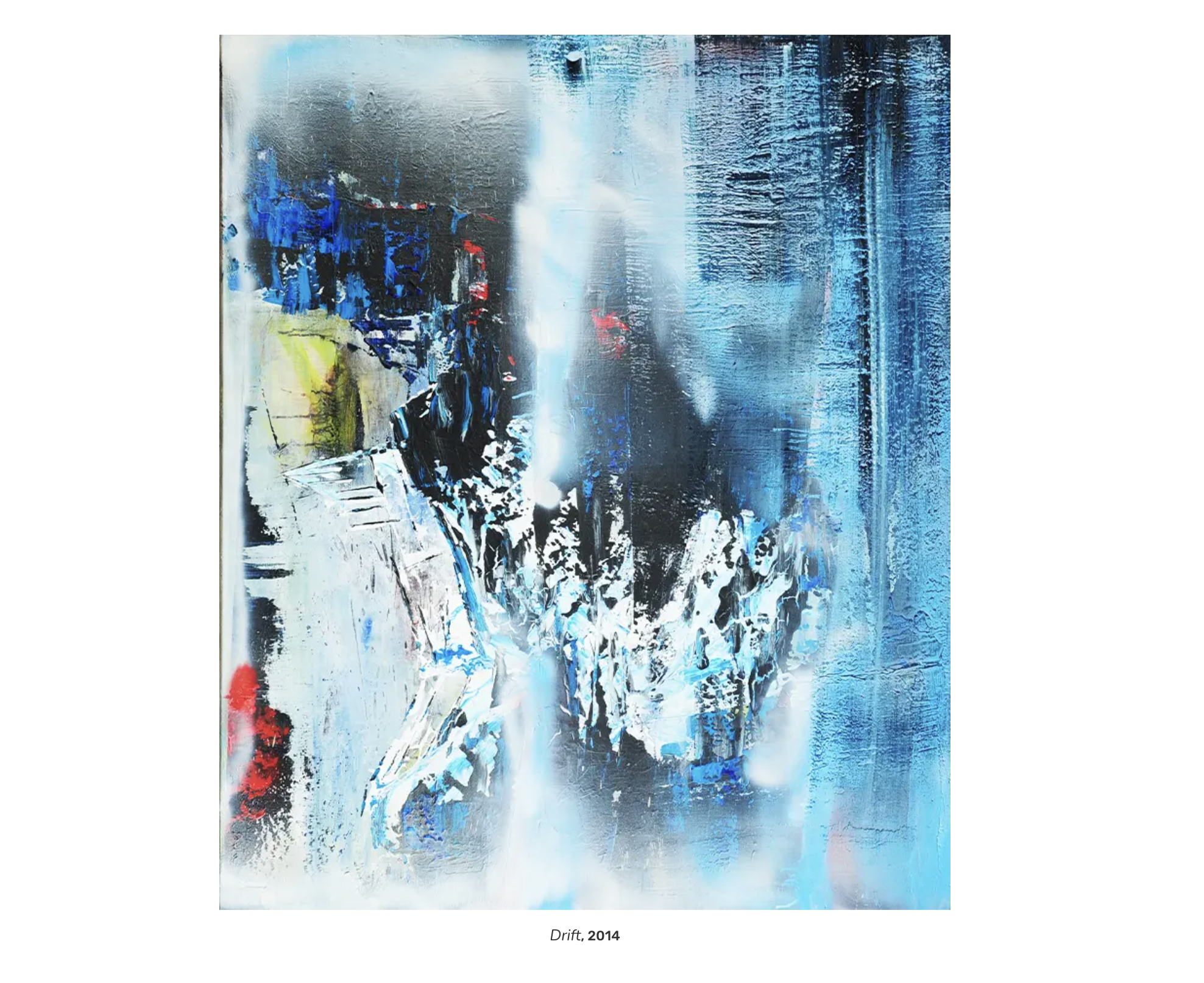
Het schilderij is een waterval van kleuren waarbij blauwe tonaliteiten overheersen en de abstractie het mogelijk figuratieve op bijzondere wijze benevelt. Het is verrassend hoe de gelaagdheid van de compositie natuurlijke elementen en strakke architectuurfragmenten doet vermoeden. Willekeurige vlekken en vormen bespelen het canvas zodat er orde in de chaos ontstaat. Het geheel getuigt van een indrukwekkende expressiviteit en blijft fascineren. Telkens opnieuw.
Maar het is slechts één kunstwerk, een momentopname in haar uitgebreide plastische oeuvre.
We kennen het werk van Anne al jaren. We zagen het evolueren tot het artistieke niveau dat ze vandaag bereikt heeft en door één constante gekenmerkt wordt: de passionele gedrevenheid waarmee ze schildert. Hoe ze in de weer is met penselen en verf, altijd bezield, nooit gratuit. Hoe ze de reële wereld on hold zet om een visionaire te laten openbloeien.
Haar oeuvre is getekend door de eerlijkheid waarmee ze haar kunstzinnige parcours uitzet. Het werk van een zoekende kunstenares die uitdaagt, grenzen verlegt en nieuwe creatieve avonturen tegemoet gaat.
Ze experimenteert met structuur en textuur, lijnen en vlakken, licht en donker, verstilling en beweging, spontane concepten en geometrische voorstellingen waarbij de natuur niet zelden de aanleiding is. Inspiratie vindt ze in reizen en beelden die ze in zich heeft opgenomen.
Haar kleurgebruik is overweldigend. Direct zichtbaar en pakkend, zowel in de zachte als in de harde tonen. Kleuren benadrukken het verhaal, versterken de sfeer en contrasteren zelden achteloos. Haar vormentaal is divers en meerduidig. Quasinonchalante strepen en vegen nodigen uit tot creatieve interpretaties en het aftasten van nieuwe mogelijkheden. Het is werk dat niet onder één noemer gevat kan worden maar een voortdurende poging is om het leven in zijn totaliteit - zijn rust én zijn onrust - te vatten.
Het artistieke verhaal van Anne is nog niet af. Verre van. We zijn benieuwd naar wat het ons in de toekomst zal brengen.”
- Frank Nobels
"Anneke Mariën ontvouwt een wereld die ontstijgt aan wat wij dagelijks ervaren. Toch bezorgt die intrigerende wereld ons een zekere geruststelling. Zij schept voor onze ogen een wereld van kleur die ons uitnodigt om binnen te dringen."
"Anneke Mariën unfolds a world that transcends our daily experiences, it’s intriguing yet comforting. She creates a world of colours before our eyes that invites us to enter."
- Bernard Defossez
Quisque iaculis facilisis lacinia. Mauris euismod pellentesque tellus sit amet mollis.